
From Hawkins to Camazotz: A Middle-Grade Obsession
by Scarlett L’Engle Roy
No one knows obsession like a middle grader. The gaps between moody personalities and awkward encounters often get filled with fixations on some sort of fantastical, pseudo-scientific, dystopia-filled story universe—and yes, I was absolutely one of those kids. Countless books and shows became everything to me at that age. I might laugh and cringe about it now, but in 2016 I held my interests and fixations very dear, through all my dramatics.
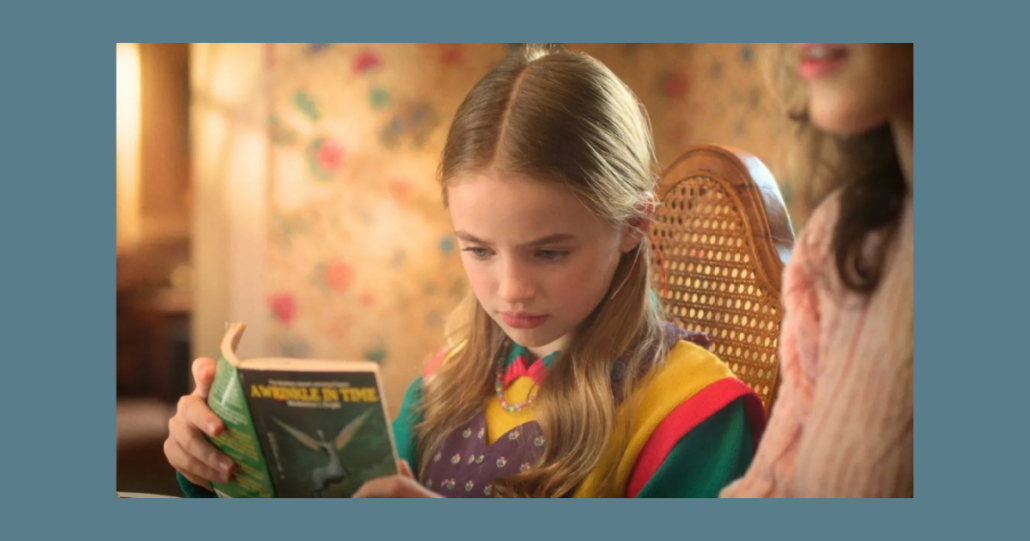
Stranger Things is exactly the kind of story that catapults you into its world, which is why it works itself so deeply into an adolescent brain (at least mine). And for years—like, a whole lot of years, 63 to be specific—A Wrinkle in Time has been a similar sort of beacon. It’s long been a cultural reference point for inter-dimensional travel: the kind of science-adjacent imagination that feels just believable enough to obsess over.
Disclosure: Madeleine L’Engle is my great-grandmother. My relationship to A Wrinkle in Time is personal—but it’s also the kind of readerly obsession I think the book invites.
So I wasn’t terribly surprised to find out that the newest season of Stranger Things alludes to A Wrinkle in Time. Twelve-year-old me is somewhere screaming into a pillow. Twenty-year-old me is slightly embarrassed by her adolescence, but also able to recognize how interesting this crossover really is.
From the start, Stranger Things has been packed with cultural references. Most notably, Stephen King’s It (no affiliation with IT, the disembodied brain of Wrinkle—I’ve seen some internet comments with an alarming lack of common sense; maybe that’s a call for us all to touch grass). Themes of friendship, loss of innocence, and a search for heroism—things that matter deeply to young people—run straight through the series. The same goes for Stand By Me.
Yes, the show clearly loves the ’80s and Stephen King, but it also leans on storytelling tropes that A Wrinkle in Time helped define: kids facing something enormous, adults unable to help, and the idea that emotional connection is often the only real way through. Watching the first episodes of the new season, I was excited to see those parallels emerging again, just as they have throughout earlier seasons.
While I could speculate endlessly about connections between A Wrinkle in Time and Stranger Things (there are so many), what really caught my attention was something that felt purposeful—and, honestly, lowkey thrilling: the way Wrinkle is used as an analogy within the show. Stranger Things is well known for using Dungeons & Dragons to explain the paranormal. But a younger character, Holly, doesn’t play D&D, so the show instead turns to A Wrinkle in Time as a way for her to understand what’s happening.
I won’t go into too much detail (being labeled a “spoiler” would be shameful and humiliating), but there are multiple references to Wrinkle’s characters and world that feel deliberate rather than decorative.
Wrinkle’s explanation of a tesseract—of folding space and moving between worlds—has long served as a helpful cultural shorthand (or a wormhole, though my aunt rejects that analogy). Stranger Things has leaned hard into that idea this season. Cool! Something else frigid? The Cold War.
Stranger Things is set toward the end of the Cold War, while A Wrinkle in Time was written near its beginning. Wrinkle expresses deeply anti-totalitarian, anti-conformist ideas by pushing them to an extreme, whereas other books of the era—like Bradbury’s Something Wicked This Way Comes—lean more heavily into anxiety. Wrinkle is more about reaction and resistance.
In an upcoming episode drop, there’s even an episode titled “Welcome to Camazotz.” I know nothing about what that episode holds, but I’m hoping for some pointed commentary on conformity and control. And honestly, there has to be something big coming about the power of friendship in this final season—after all, Meg’s love for Charles Wallace is what saves everyone at the end of Wrinkle. I also wouldn’t be surprised by a twist (man-with-the-red-eyes-controlled-by-IT energy, anyone?). There are far more parallels I could draw—Meg and Eleven, Charles Wallace and One, all the dad stuff—but that would take more time and words than I have.
These stories endure because they give young people problems to wrestle with and hope to hold onto when the world feels too big. Obsessions aren’t silly; they’re a way of trying to understand chaos.
It’s still wild to me that Madeleine created something so lasting, relatable, and adaptable. It’s also a little surreal to have this crossover land so casually (the family really didn’t know about it in advance, I promise). And while I would never want to relive being a moody seventh grader, I can appreciate that time as one of intense growth—and I’m grateful for all the stories that shaped me.
May middle-grade fixations live on.
May tweens always have something to obsess over.
May they stay awkward.
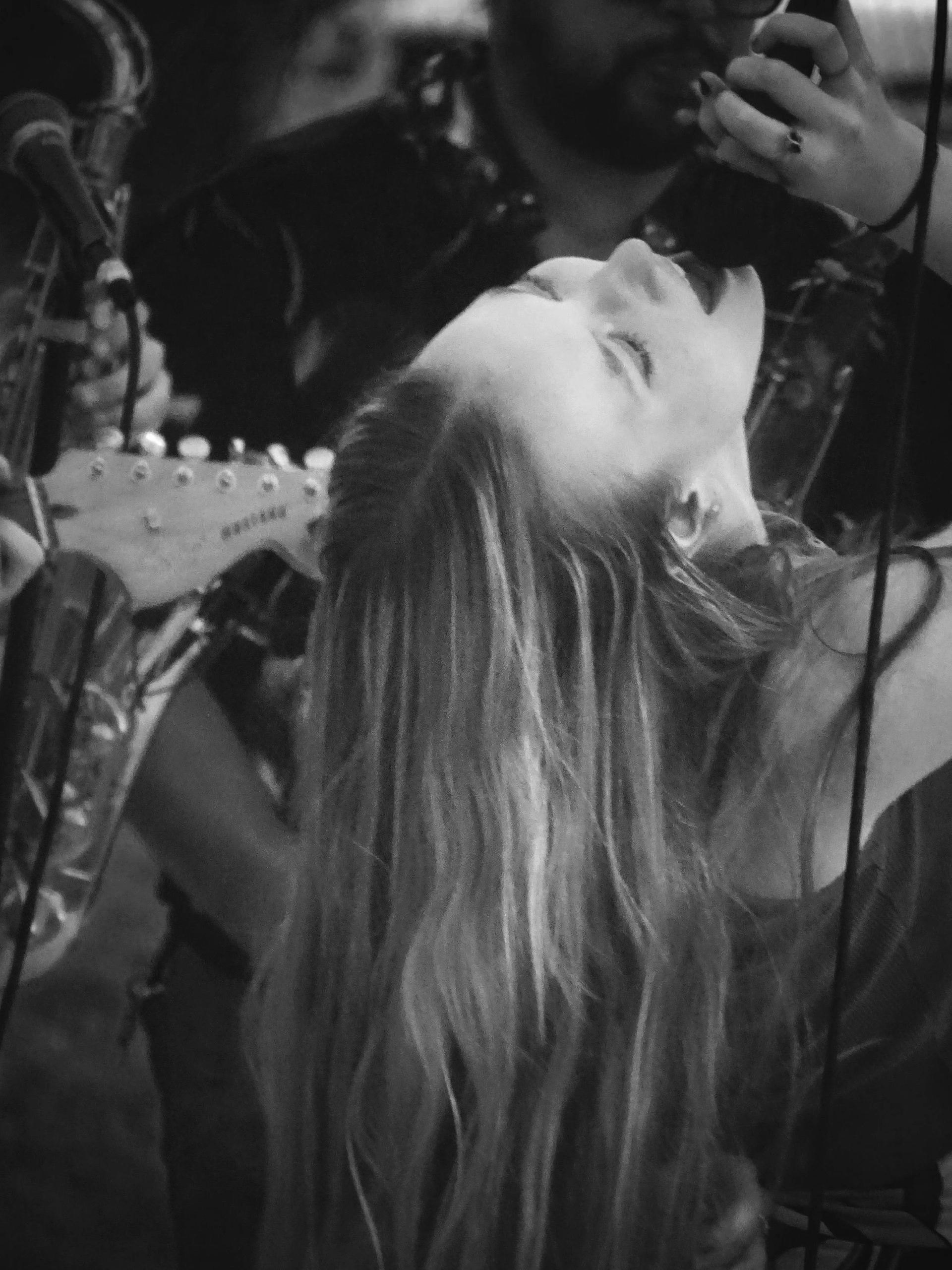
Scarlett L’Engle Roy is a musical artist based in London and New York. As an indie-rock artist with deep rooted alt-country influences, she uses music to tell stories for herself and others to relate to. She is currently finishing her musical studies at Trinity Laban Conservatoire. Roy is Madeleine’s great-granddaughter and carries her family’s legacy and love for literature with her. scarlettroy.com
